Services and Traffic Routing
Pods are ephemeral. Their IPs can change as they are recreated.
A Service gives clients a stable destination while Kubernetes updates backend pod endpoints behind the scenes.
How a Service Works
A Service typically includes:
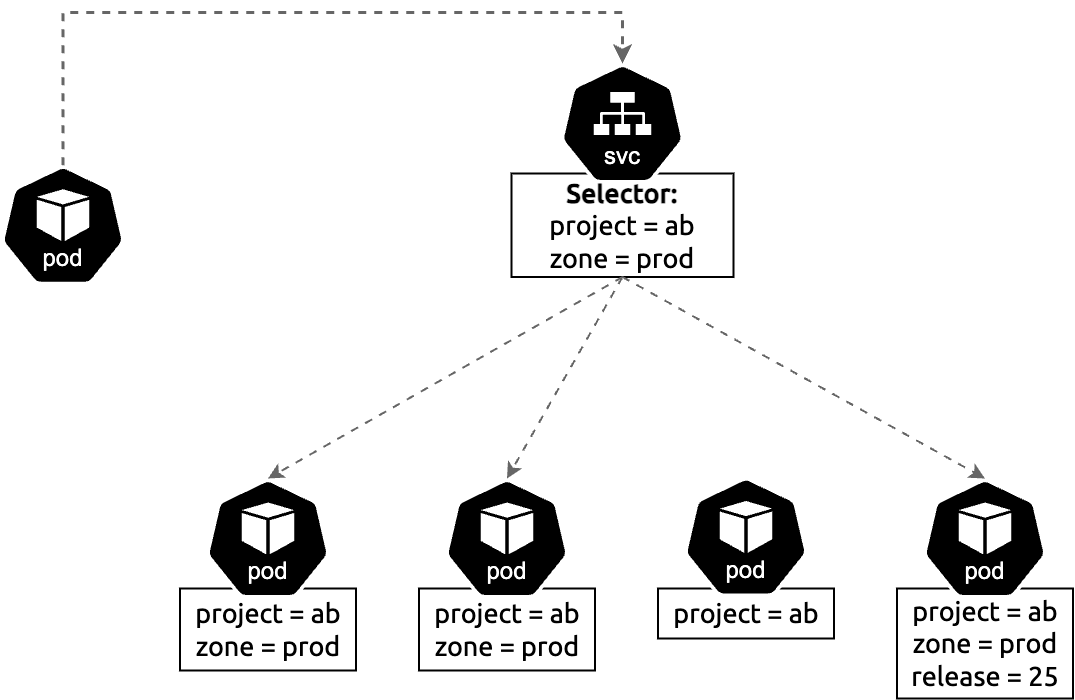
- selector: chooses backend pods by label.
- virtual IP (ClusterIP): stable in-cluster address.
- DNS name: stable service discovery name.
- port mapping: client-facing port to container-facing target port.
apiVersion: v1
kind: Service
metadata:
  name: web
spec:
  selector:
    app: web
  ports:
    - port: 80
      targetPort: 8080
Service Types
1) ClusterIP (default)
Internal-only virtual IP for in-cluster access.
Use when workloads communicate inside the cluster.
2) NodePort
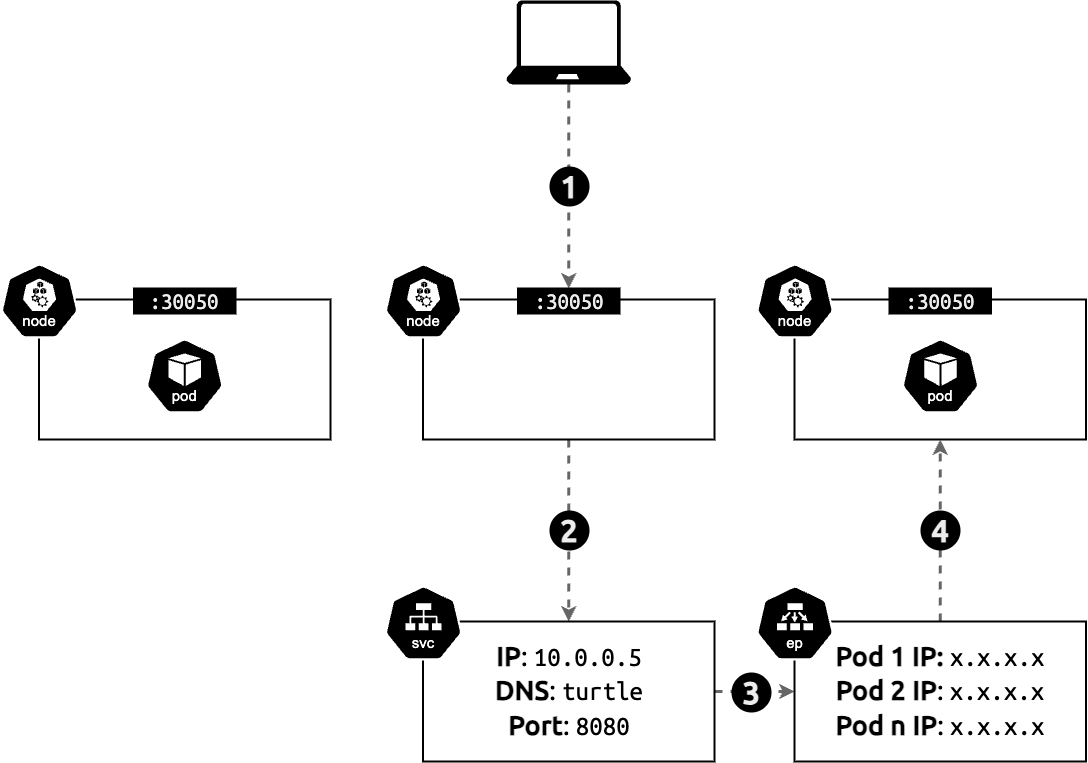
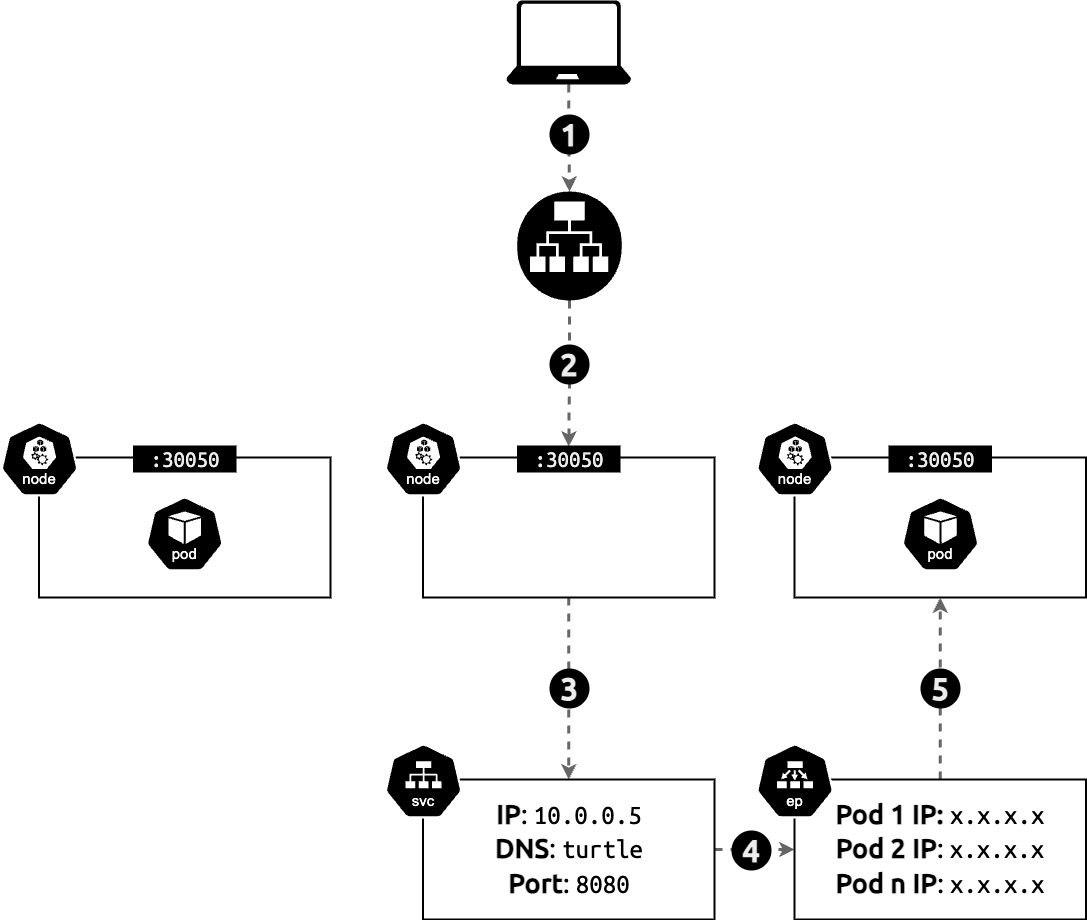
Exposes service on each node IP and a static port (default range 30000-32767).
Use for basic external testing or on-prem setups without a cloud load balancer.
3) LoadBalancer
Requests an external load balancer from your infrastructure provider (cloud or compatible on-prem implementation).
4) ExternalName
Maps a Service to an external DNS name, without pod backends.
EndpointSlices
Kubernetes stores service backend endpoint data in EndpointSlice objects.
This improves scalability compared to the older Endpoints object for large services.
Check backend resolution:
Common Pitfalls
- Selector mismatch: Service has no endpoints.
- Wrong
targetPort: traffic reaches pod IP but wrong container port. - Readiness probe failures: endpoints removed because pods are not ready.
Summary Table
| Type | Visibility | Typical use |
|---|---|---|
ClusterIP |
Internal | Service-to-service traffic |
NodePort |
External via node IP | Basic external exposure |
LoadBalancer |
External LB IP/hostname | Public or private ingress point |
ExternalName |
DNS alias | External dependency abstraction |